Showing posts with label classic. Show all posts

Wednesday, December 1, 2010

Dear Dr. Scarpetta...

I think that that woman could be the only person on earth who has put up with so many psychopaths breaking into her house at night.

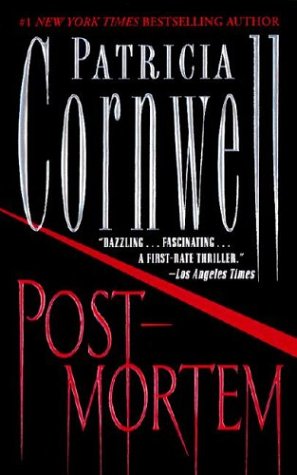
Kay Scarpetta in the medical examiner (yes, a coroner) in Richmond, Virginia in Patricia Cornwell's mystery novels. With her detective "buddy" Marino, they're basically the average pair of people who solve crimes like in any other mystery novel.
What I like about Cornwell's books though are that you get to actually see into Kay's real life, a.k.a, her life at home, not just her bloody life at the morgue and with her jack*** of a commissioner named Amburgey. She actually has real feelings! (Unlike some un-blogging worthy books I've read).
Kay has a weird way to relieve her stress from work. Who wouldn't? I think that you need a little more than yoga or getting drunk to help yourself feel better when you're getting stalked by a guy who's planning to trick you then stab you or strangle you and rape you like he did to 5 other women.
So, Kay relieves herself by cooking Italian food. It's like a little blanket that she hides under from the rest of the world. After a hard day at work she goes home, drinks some liquor, and prepares to go to bed.
I always will wonder when she realizes that making food and drinking alcohol won't help anything, especially since she always happens to it a few days before or the very day that the person who killed everybody else tries to kill her, too.
I think that maybe for some people who hide from the world like Kay have a thick, tight warm blanket around them, but sometimes the blankets have small holes or tears that make the people inside them feel insecure. We all fell insecure, but when you've been in a cocoon for a while, you sort of get used to the dark. Then, when you see the outside world, you're frozen like a deer in headlights because you're so used to seeing the world from the inside of a safe little shell. As tempting as it may be to be addicted to the darkness and not want to see the reality side of things, you always should. If you don't, you're living your whole life in isolation. You're ignoring the world and what it has to offer. And maybe when the opportunity of a lifetime comes along, you'll be hiding. You won't even be there to miss it.

But keep it up, Scarpetta!
KEEP FIGHTING THE EVIL FORCES

Wednesday, November 10, 2010

A Bird Cries, A Damsel Sighs...

When Art Spiegelman wrote the life-changing graphic novel, MAUS, he wrote about anything but a fairy tale. Portraying the characters as different animals, Spiegelman tells the story of his father's experience in the Holocaust.
Right away, I saw a connection between this book and Terrible Things. Not only are they both stories of the Holocaust, but both show the characters as animals, but I think that they both did so for different reasons. Eve Bunting, the author of Terrible Things, had different animals being discriminated against to show the reader the ridiculous things that people in real life discriminate against, and how differences don't matter.
In MAUS, I think that Spiegelman did something very clever with which people from the Holocaust he put as each animal. Spiegelman, his father, his family, and all the rest of the Jews are drawn as mice. Later when he draws the Nazis, if you look closely, you'll notice that they're cats. This says a lot about what happened in the Holocaust. The Nazis and Jews were just like cats and mice: cats hunt mice, and unlike in Tom & Jerry, the cats win the fight in real life. They mice are their prey, small, weak, and helpless. But cats seem like lovable, friendly creatures, a companion, a pet. But to most people, mice, rats, or just all rodents in general, are rabid, nasty, garbage hoarding, dirty, foul beasts, and that's exactly what the real Nazis in the Holocaust thought about the Jews, although the Jews were innocent victims of their power. But the real-life version is the cat is the exact opposite of what the Jews thought of the Nazis. To the Jews, Nazis were killers, liars, men to be feared.
The fact that sometimes animals like mice or rats, playing a human role or not, can be misunderstood, relates back to an entry way back on this blog. This particular entry was about Templeton. Remember him? The rat from Charlotte's Web? I don't think that I'll ever let the idea that he's the real victim of discrimination in Charlotte's Web leave my cerebrum. Throughout the whole book he was described as a nasty, mean and dirty. I find that not only were the animals in the barn discriminatory toward Templeton, but also E.B. White!

1rat noun \ˈrat\

1
a : any of numerous rodents (Rattus and related genera) differing from the related mice especially by considerably larger size

1mouse noun \ˈmas

: any of numerous small rodents (as of the genus Mus) with pointed snout, rather small ears, elongated body, and slender tail

I wonder why people think that rats or mice are such abd creatures. Is it because they've had to adapt to be dirty or live in subways because of what us humans have done to the world? Modernization, construction, pollution....what could have made the difference?

Sunday, October 17, 2010

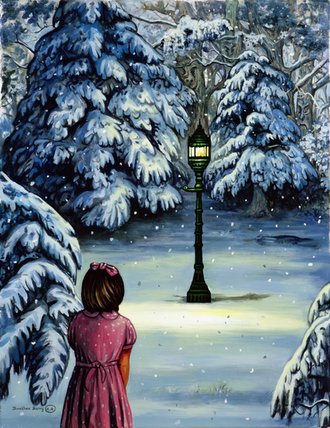
Appreciation - The Lion, The Witch, and The Wardrobe

Besides our favorite things and what we liked to do, there was one thing that set me apart from most of my friends. It wasn't my culture, my religion, or anything of that sort. It was one thing that even I didn't realize until a week or two ago. It was the fact that I had never really read any "childhood books" in my childhood.

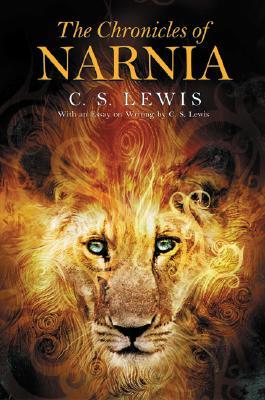
I remember reading Charlotte's Web when I was little. I remember skimming through A Wrinkle in Time, and hating it. I also remember the new copies of the whole Chronicles of Narnia that my aunt gave me when I was about 6 or 7 years old. I sat in my room and read The Lion, The Witch, and The Wardrobe when the sunlight dripped, and leaked through my windows in the afternoon. I sat and read on the cold, blue tile bathroom floor and closed the door, when I didn't want anyone to disturb my reading. And after I had read just The Lion, The Witch, and The Wardrobe, I gave the whole Chronicles of Narnia away.
Why? I don't actually remember. I just gave them away without a second thought.
But now? I wouldn't give up my book filled with The Chronicles of Narnia for a million dollars. (Ok, I would, but you get what I'm trying to say).
Although I didn't realize it when I was younger, the whole entire Chronicles of Narnia are filled with magic, and The Lion The Witch and The Wardrobe especially.
The Lion The Witch and The Wardrobe is one of the most well known books by C.S. Lewis.
It contains hope, joy, sadness, loneliness, and, finally, the magic that has the power to
transport you and make you feel like you're in Narnia with Lucy, Edmund, Peter, and Susan.
The whole entire book, you have the "Don't look into the closet! Don't look into the closet!" kind of feeling like when your watching a scary movie. C.S. Lewis keeps you on your toes, alert and aware, but at the same time dreamy and isolated as you imagine yourself in Narnia.
How does he do this? Description. Sentence length. Adjectives and words that evoke feelings. Not only does C.S. Lewis use these things, but most writers do too, and these things are what make a story come alive in front of the readers eyes. These things make something 2-D, like words on a piece of paper, turn 3-D like a colorful pop-up book. You can visualize the story in your mind and relate to it through your own life and experiences.
Obviously, C.S. Lewis did a good job: there are multiple editions of The Lion The Witch and The Wardrobe, a movie, and even more Chronicles of Narnia books that I'm reading now that I know how great the books are.

One of my good friends once told me: "Always try new things. You never know what you might find." Now, I can never say that that wasn't true.

Sunday, October 3, 2010

Never Shut Yourself In A Wardrobe

"Edmund can be so rude! Lucy, Peter, and Susan seem so sweet, but Edmund is like the odd person out."
"What's up with the whole, 'don't shut the wardrobe door' thing? Is it bad luck? Lucy and Peter haven't shut the wardrobe, but Edmund has...more 'odd one out'? Or symbolism tying into that? It's mentioned so much."
If you ever read the book The Lion, The Witch, and The Wardrobe, you would probably notice that all the kids that the Professor had adopted had good manners, were sensible, and were fairly nice to one another. Except for Edmund.
Consistently throughout the book I see situations where Edmund is left being the odd one out. First, he's horribly mean to Lucy when she tells them about Narnia. Even after he went there himself, he still pretends that she's making it up. Peter and Susan, however, make the effort to beleive that Lucy is telling the truth by consulting the Professor.
Next, he closed the wardrobe door. Now, at first this may not seem like a big deal (it didn't to me either), but since C.S. Lewis mentions the fact that one should never oneself in a wardrobe time after time, I've come to the conclusion that it must mean something. although I haven't figured out what yet.
So while Peter and Lucy sensibly did not close the wardrobe door on themselves when the went inside the wardrobe, Edmund immediately shut it, obviously not knowing any better. This is another example of him being the odd one out. You can't say that he didn't know any better because he isn't as old as Peter, but Lucy is younger than him, and yet she knows not to shut the wardrobe. I keep wondering why he closed the wardrobe. I mean, they all grew up in the same family, Peter the longest and Lucy the shortest, so why don't they all know not to shut a wardrobe behind them?
Another reason that Edmund is the 'odd one out' out of the four siblings is the most obvious reason in the whole book: he went against all of them to be a spy for the white witch. I mean, who does that? Who goes against their siblings (no matter how much you think they're the rude and stuck up people when you are) and basically hands them a piece of paper with their death sentence on it?
Edmund is nothing like his three siblings. While they are nice, understanding, and trustworthy, he turns his back on them, Aslan, and the creatures of Narnia for the witch and her stupid enhanced and enchanted Turkish delight.
I think that throughout the book, Edmund changes though. Even though in the beginning of their stay in Narnia he betrays them to the white witch, by the end of their stay he is one of the two kings if Narnia, one of the people that helped fight against the witch, and has fought countless battles against evil forces that may have still been lurking.
I don't that Edmund will ever be exactly like his siblings, because there is always one odd one out, but through his journeys in Narnia he gained trust, loyalty, friends, and the right to be named one of the kings of Narnia. Long live the Queens and Kings!

Tuesday, September 28, 2010

A Small Cliche Fantasy Story

If I hadn't reread Charlotte's Web, taken notes, thought about it thoroughly, and written numerous entries on it, if someone asked me what I thought it was about, I probably would have said that it was a small cliche fantasy story that involved a pig and his best friend named Charlotte.
Although it does have the occasional cliche moral or theme (i.e. don't judge a book by it's cover, friendship), how I look at Charlotte's Web now is the complete opposite of how I thought about it before...starting with who I think is the most misunderstood character in this book: Templeton.
At first, Templeton doesn't play much of a big role in Wilbur's life. Toward the end and a little bit toward the middle, he helps save it.
That's exactly what bothers me about Templeton and Wilbur's relationship. While Charlotte thanks Templeton for going out to the dump for Wilbur's benefit, Wilbur doesn't really acknowledge Templeton at all, or the fact that without him, Charlotte would run out of words to write on her web. And without new words on her web, Wilbur is basically asking to become Zuckerman's bacon supply.
Not only does Templeton help Wilbur by collecting scraps of writing at the dump, he bit Wilbur's tail to make him wake up after he fainted at the fair. And still, Templeton doesn't even get the slightest hint at a thank you from Wilbur. All Wilbur wants is more.
Finally, Templeton stands up for himself when Wilbur wants him to get Charlotte's egg sack to bring back to the barn.
"Who made trip after trip to the dump? Why, it was old Templeton. Who saved Charlotte's life by scaring that Arable boy away with that rotten goose egg? Bless my soul, I beleive it was old Templeton. Who bit your tail and got you back on your feet this morning after you fainted in front of the crowd? Old Templeton. Has it ever occurred to you that I'm sick of running around and doing favors?"
I totally get and agree with what Templeton is saying. If you or I did numerous favors for someone, I think that we would both expect that that person at least gave us a thank you, or a small favor back.
But in truth, Wilbur never really thanked Templeton for anything that he did in Wilbur's favor. All Wilbur did to make Templeton happy is give him food, but I think he deserves a real thank you, not bribery.
I think the quote above is meant to make Templeton look like the "bad guy". In fact, that's what I thought when I first read it. But now, I think that Wilbur is such a stuck up brat. He says to Templeton, "Stop acting like a spoiled child!", when in reality, Wilbur is the spoiled child. He asks favors from other people without giving them a thank you, and has had people like Fern and Charlotte care and nurture him his whole life. He doesn't understand Templeton's point of view at all.
I also think Wilbur is hypocritical. When he's up at night in one of the chapters, he looks down on Templeton for being up late chewing on things, which is what a rat does, when he himself is up late as well. This is another example of Wilbur not understanding Templeton's point of view. Being up late and chewing is an instinct for rats, not pigs.
I think that even though Templeton is mainly portrayed as a bad character, Wilbur could not have survived without him and that Wilbur is ignorant and unaware for not realizing this.
I wish I could say that I thought Wilbur was a character who was caring and understanding for others, but I would be lying. Wilbur never really showed understanding or gratefulness toward Templeton...the rat he should be thanking for helping him stay alive to see the spring once more.