I wonder if anybody ever wants to see the truth.
Or, at least the downsides of things. I think that it depends on whether you're an optimist or a pessimist. I feel as though optimistic people always try to block out the bad things, because to an optimist, almost everything has a solution and that solution will solve the problem they're dealing with, so they always look on the bright sides of things (or at least this is what I gather an optimist to be). There is always a positive outlook, a.k.a, the glass is half full. A pessimist is pretty much a person who looks at the downsides of things, the cons, the things that could go wrong with any theoretical solution to this theoretical problem. Me, being just that, always look for problems with things before getting my hopes up, thus resulting in the opposite of the phrase for optimistics: the glass is half empty.
I'm not saying that these are solid set types of people. Plenty of people are in-between, some are extremes in either, and some sit comfortably in one of the two. But I wonder if authors give clues to what the rest of the book is about through these groups.
So far, my answer is yes, even if it's not directly through the character in their dialogue or thoughts.
For example, Persepolis. The main character tells one of her mom's friend's daughter, "when people say that people are away on a trip, doesn't that mean that they're dead?". This was after the other girl, told the main character that her dad was on a trip.
To me, this statement is pretty pessimistic. Not only because it's obviously telling this girl that her dad is dead, but that it's said so casually, like it should be expected that he's dead because of the revolution. It's weird, because I was thinking that the main character was pretty optimistic. She "talks" to God, wanted to become a prophet, and always offered up solutions to problems.
But in books, most things aren't what you think they are. Looks can be deceiving.
Just like the lipeic tree in The Zookeeper's Wife.
First off, let me clear something up. I did not finish the book, so I don't know what happens at the end, or past around page 28. But I can tell you that I'm almost positive that the lipeic tree, a kind of lilac shrub, is a symbol or representation of something throughout the book.
The zookeeper's wife talks a lot (about a page and then some of font this or this big) about the lipeic tree. She talks about how it's beautiful, it makes her home beautiful, it makes her town beautiful. It makes everything beautiful and perfect in her life. Its flowers, its scent all make the lipeic tree beautiful and breathtaking.
I absolutely love what the author did next. Okay, I know that sounded super-corny but let me tell you, it is probably the most genius thing ever, because it's just like when magnets don't attract each other and wind up pushing each other away and you see the magnets move and sway without either one of them touching each other and your fingers barely moving.
What she said next was that the local slang for white lies was lipia.
Lipia. Lipeic.
Lipia. Lipeic.
Lipia. Lipeic.
I think it's pretty neat how she incorporates this seemingly small detail into her story with one sentence. While the Lipeic tree is supposed to be this beautiful, calming tree, something so similar is the opposite of what it actually is.
Like in Persepolis, a dad being on a trip is so innocent, but the fact that he might be dead brings doubts into your mind. Doing something big or small may not seems so simplistic or innocent anymore.
Anything can have two sides, and most things do: the optimistic side or the pessimistic side.
So which one do you beleive?
Showing posts with label understanding. Show all posts
Showing posts with label understanding. Show all posts
Friday, December 10, 2010

Wednesday, November 17, 2010
A Bunny's A Bunny, No Matter How Small
For my picture book, I would love to do an "expansion" or "separate way of looking at" the quote from Horton Hears A Who, "A person's a person, no matter how small."
You know, when I hear this quote, I think of people. I think of the fact that all people should be treated fairly, equally. But what else comes to my mind are animals. Yes, we all know that animals get abused. They go to shelters, and make wonderful pets to adopt and love, you care for them, they care for you.
The two probably most common pets are cats and dogs. Maybe that why they're included in the expression "It's raining cats and dogs", and not exotic pets that are kept worldwide. Maybe if we did, the expression would be, "Hey! It's raining monkeys and hedgehogs!"
When people see ads or campaigns or fundraiser signs for animal shelters or animal protection organizations, they see cats and dogs. On a pet shop ad: cats and dogs. Cats and dogs are seen everywhere. Why? They're such common pets. The thing is, some people don't think about the smaller or more exotic animals that get abused or put in shelters or euthanized each day.
"According to the ASPCA, companion rabbits are the third most frequently euthanized animals at shelters, behind cats and dogs. While many shelter rabbits come from feed stores, flea markets, or laboratories, in reality, most rabbits facing euthanasia were once family companions or classroom pets who were bought at pets stores or breeders and surrendered to shelters when the novelty wore off or at the conclusion of a school year. Many people mistakenly assume that rabbits are low-maintenance or good starter pets for children, rather than physically fragile, yet spirited and opinionated animals..."
(http://saveabunny.org/about#need)
Some people don't know that small animals like rabbits or birds or ferrets or reptiles are abused so much each year. I didn't even know how much either, until I took the time to research it, and I learned so much.
 I went to SaveABunny.org, (a link is listed above), and found out how many rabbits were abused each year, and even read up on some real-life rabbit-abuse cases and their trials. It's astounding how rabbits can be mistreated. While some can be living in horrible, cramped, and filthy conditions, others can be outright abused, through torture or other kinds of beatings. The white and gray rabbit to the left was even set on fire. (Phoenix - This brave & loving bunny was tortured and set on fire. He came to SaveABunny for treatment of his physical & emotional wounds.)
Since this whole entire project is for social awareness, I want to raise social awareness on how many small animals -not just bunnies- get abused each year. Because after all, a bunny's a bunny, no matter how small.


You know, when I hear this quote, I think of people. I think of the fact that all people should be treated fairly, equally. But what else comes to my mind are animals. Yes, we all know that animals get abused. They go to shelters, and make wonderful pets to adopt and love, you care for them, they care for you.
The two probably most common pets are cats and dogs. Maybe that why they're included in the expression "It's raining cats and dogs", and not exotic pets that are kept worldwide. Maybe if we did, the expression would be, "Hey! It's raining monkeys and hedgehogs!"
When people see ads or campaigns or fundraiser signs for animal shelters or animal protection organizations, they see cats and dogs. On a pet shop ad: cats and dogs. Cats and dogs are seen everywhere. Why? They're such common pets. The thing is, some people don't think about the smaller or more exotic animals that get abused or put in shelters or euthanized each day.
"According to the ASPCA, companion rabbits are the third most frequently euthanized animals at shelters, behind cats and dogs. While many shelter rabbits come from feed stores, flea markets, or laboratories, in reality, most rabbits facing euthanasia were once family companions or classroom pets who were bought at pets stores or breeders and surrendered to shelters when the novelty wore off or at the conclusion of a school year. Many people mistakenly assume that rabbits are low-maintenance or good starter pets for children, rather than physically fragile, yet spirited and opinionated animals..."
(http://saveabunny.org/about#need)
Some people don't know that small animals like rabbits or birds or ferrets or reptiles are abused so much each year. I didn't even know how much either, until I took the time to research it, and I learned so much.
I went to SaveABunny.org, (a link is listed above), and found out how many rabbits were abused each year, and even read up on some real-life rabbit-abuse cases and their trials. It's astounding how rabbits can be mistreated. While some can be living in horrible, cramped, and filthy conditions, others can be outright abused, through torture or other kinds of beatings. The white and gray rabbit to the left was even set on fire. (Phoenix - This brave & loving bunny was tortured and set on fire. He came to SaveABunny for treatment of his physical & emotional wounds.)Since this whole entire project is for social awareness, I want to raise social awareness on how many small animals -not just bunnies- get abused each year. Because after all, a bunny's a bunny, no matter how small.
Tuesday, October 26, 2010
Mother to Son
 "Well, son, I'll tell you:
Life for me ain't been no crystal stair.
It's had tacks in it,
And splinters,
And boards torn up,
And places with no carpet on the floor—
Bare.
But all the time
I'se been a-climbin' on,
And reachin' landin's,
And turnin' corners,
And sometimes goin' in the dark
Where there ain't been no light.
So, boy, don't you turn back.
Don't you set down on the steps.
'Cause you finds it's kinder hard.
Don't you fall now—
For I'se still goin', honey,
I'se still climbin',
And life for me ain't been no crystal stair."
-Langston Hughes (1902-1967)
In the poem "Mother to Son" by Langston Hughes, Langston takes the role of a mother, speaking to her son about what her life has been like and the troubles that she's been through. The poem acts as a kind of motivational speech to the son, telling him, "Don't you set down on the steps, 'Cause you finds it kinder hard." The mother is telling the son not to give up because life get's hard, and that he's not climbing a crystal stair, like some people.
The crystal stair in the poem represents perfection, and how not all people get to live the kind of life where everything is perfect. The mother, speaking to the son, is telling him about all the difficulties that she's had in life. A splinter, a tack, cold, bare floors or torn up stair boards. Some things hurt for a minute, like a splinter, but some leave bruises for days, or even scars and cuts.
The time period in which the poem was written (1922, around the time of the Great Depression and when African Americans didn't have as many rights as they do today and were discriminated against) also relates to the theme of not giving up because of bumps in the road like in "Mother to Son".
Even 41 years later, there were still issues with discrimination against African Americans.
On August 28th, 1963, Martin Luther King Jr. said:
"...We must face the tragic fact that the Negro is still not free. One hundred years later, the life of the Negro is still sadly crippled by the manacles of segregation and the chains of discrimination. One hundred years later, the Negro lives on a lonely island of poverty in the midst of a vast ocean of material prosperity. One hundred years later, the Negro is still languishing in the corners of American society and finds himself an exile in his own land."
In the poem "Mother to Son" by Langston Hughes, not only does the son represent a literal son, whose mother is telling him valuable information that he'll use throughout his life, the son also symbolizes the whole entire African American population in the United States in 1922, and Hughes is telling them not to let a ripped up floor board, or being tired of climbing, stop them from reaching their ultimate goal: equality.
Sunday, October 24, 2010
Social Awareness Journal - Day 5
Day 5
Wednesday, October 27th, 2010
Abortion: Pro-life, or Pro-Choice?
 "Abortion: the termination of a pregnancy after, accompanied by, resulting in, or closely followed by the death of the embryo or fetus"
"There are two many answers to the question of abortion access. They can be grouped into two basic positions:
Those promoting a pro-life or anti-abortion position say that the government should override a woman's decision to have an abortion in some, many, or all cases, and require her to continue her pregnancy to childbirth.
Most pro-lifers base their stance on the belief that human life, in the form of an ovum and spermatozoon, becomes a human person during the process of conception. Thus, a human pre-embryo, embryo and fetus are all persons entitled to fundamental human rights, including the most basic right: to be allowed to live. The lives of two humans are being considered here: that of the woman and her the life of the pre-embryo, embryo, or fetus.
Those promoting a pro-choice position say that the government should not interfere with the woman's decision, or should do so only under very rare circumstances. She should be able to have an abortion in many, most or all cases.
Most pro-choicers base their stance on the belief that human life becomes a human person at some time after conception -- perhaps when the embryo's heart starts beating, or when the fetus first looks human, or it becomes sentient, or it has half emerged from its mother's body, or is born, or is severed from its mother and is functioning independently. They feel that a woman should not be forced to go through a pregnancy and childbirth if she does not choose to do so. She should be allowed to have an abortion if it is done before her embryo or fetus attains personhood."
Abortion has become a major way for people of different opinions to clash. As you read in the article above (cited below), there are two different point of views on abortion. I, myself, am a pro-choicer, because I beleive that a woman has the right to do what she wants to do with her own body. But, at the same time, pro-lifers beleive that a baby, even as a fetus, is still living and deserves a chance at life. Pro-lifers think that no woman should have an abortion.
www.m-w.com
http://www.religioustolerance.org/abofund.htm
Wednesday, October 27th, 2010
Abortion: Pro-life, or Pro-Choice?
"Abortion: the termination of a pregnancy after, accompanied by, resulting in, or closely followed by the death of the embryo or fetus""There are two many answers to the question of abortion access. They can be grouped into two basic positions:
Those promoting a pro-life or anti-abortion position say that the government should override a woman's decision to have an abortion in some, many, or all cases, and require her to continue her pregnancy to childbirth.
Most pro-lifers base their stance on the belief that human life, in the form of an ovum and spermatozoon, becomes a human person during the process of conception. Thus, a human pre-embryo, embryo and fetus are all persons entitled to fundamental human rights, including the most basic right: to be allowed to live. The lives of two humans are being considered here: that of the woman and her the life of the pre-embryo, embryo, or fetus.
Those promoting a pro-choice position say that the government should not interfere with the woman's decision, or should do so only under very rare circumstances. She should be able to have an abortion in many, most or all cases.
Most pro-choicers base their stance on the belief that human life becomes a human person at some time after conception -- perhaps when the embryo's heart starts beating, or when the fetus first looks human, or it becomes sentient, or it has half emerged from its mother's body, or is born, or is severed from its mother and is functioning independently. They feel that a woman should not be forced to go through a pregnancy and childbirth if she does not choose to do so. She should be allowed to have an abortion if it is done before her embryo or fetus attains personhood."
Abortion has become a major way for people of different opinions to clash. As you read in the article above (cited below), there are two different point of views on abortion. I, myself, am a pro-choicer, because I beleive that a woman has the right to do what she wants to do with her own body. But, at the same time, pro-lifers beleive that a baby, even as a fetus, is still living and deserves a chance at life. Pro-lifers think that no woman should have an abortion.
www.m-w.com
http://www.religioustolerance.org/abofund.htm
Social Awareness Journal - Days 3 and 4
 Day 3
Sunday, October 24th, 2010
Poverty, And Its Effects On People Worldwide
What is poverty, anyway? Poverty is "the state of having little or no money and few or no material possessions". While many people around the world can afford everyday expenses such as food or clothing, 97 million of the 471 million people living in Eastern Europe and Central Asia live on less than 2 dollars a day. Also of those 471 million, 24 million live on less than 1 dollar a day. Nearly 50 percent of sub-Saharan Africans live on less than $1 a day, and the number of people in South Asia who live on less than 1 dollar a day reaches almost half a billion. In South Asia, 240 million people don't have access to safe water, and half a billion don't have proper sanitation.
The poverty rates don't even end there. There are tons of families, children, and adults living in poverty in the United States. In fact, 37 million Americans are living in poverty, and nearly 35% of the poorer population in the US is children. The ratio of children who live in poverty in the US, is 1 to 6.
The fact that there are so many people who live in poverty around the world is so depressing. Here I am, typing this on a computer, in my own room, in my own house, with my own family, who makes an average amount of money each year. We're certainly not in poverty, but we're not rich, either. And the funny thing is that I never really remember thanking anybody for what I have. I know that on my birthdays, when people give me gifts, I say thank you. I say thank you when I get presents on the winter holidays. But have I ever thanked anyone for what me or my family has? Or what we don't have?
Day 4

Monday, October 25th, 2010
Sexism...
sex·ism - noun \ˈsek-ˌsi-zəm\: prejudice or discrimination based on sex; especially: discrimination against women
2: behavior, conditions, or attitudes that foster stereotypes of social roles based on sex
Sexism exists. As you read above, sexism is the belief or attitude that one gender is inferior to, or less valuable than the other.
Sexist statements include things like, "women can not play sports such as football or 'fight'" or "men can not go to salons or get their nails done". These statements discriminate against certain genders; male, or female. "But what's wrong with sexism?" someone might ask. To be short, sexism is just another form of any other kind of discrimination, no worse than racism or other types.
Just like what I said on my point of views of gay suicides and the people who bully people who are gay, I just don't understand it. And I don't understand this. Why would someone feel that they're more superior to someone else just because of their gender? I appreciate women who stand up against sexism toward women (although there is sexism against men, as well). I especially love feminist artists, and how they express their ideas about sexism and feminism in their artwork. It says a lot about how some people in our society today think about sexism.
I'd like to give a shout out to Kiki Smith, my favorite feminist artist, as of...yesterday. ;)
Cite: wordnetweb.princeton.edu/perl/webwn
http://www.npc.umich.edu/poverty/
globalissues.org
http://www.nccp.org/topics/childpoverty.html
thinkquest.org
savethechildren.org
Sunday, October 3, 2010
Never Shut Yourself In A Wardrobe
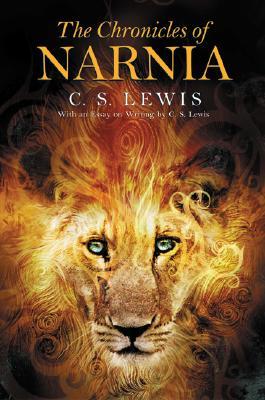 "Edmund can be so rude! Lucy, Peter, and Susan seem so sweet, but Edmund is like the odd person out."
"What's up with the whole, 'don't shut the wardrobe door' thing? Is it bad luck? Lucy and Peter haven't shut the wardrobe, but Edmund has...more 'odd one out'? Or symbolism tying into that? It's mentioned so much."
If you ever read the book The Lion, The Witch, and The Wardrobe, you would probably notice that all the kids that the Professor had adopted had good manners, were sensible, and were fairly nice to one another. Except for Edmund.
Consistently throughout the book I see situations where Edmund is left being the odd one out. First, he's horribly mean to Lucy when she tells them about Narnia. Even after he went there himself, he still pretends that she's making it up. Peter and Susan, however, make the effort to beleive that Lucy is telling the truth by consulting the Professor.
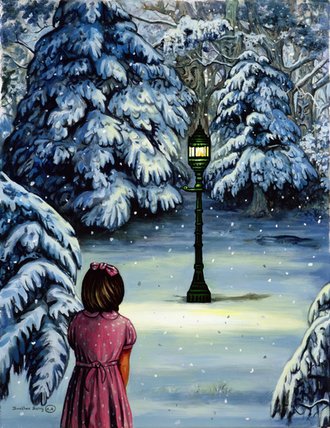
Next, he closed the wardrobe door. Now, at first this may not seem like a big deal (it didn't to me either), but since C.S. Lewis mentions the fact that one should never oneself in a wardrobe time after time, I've come to the conclusion that it must mean something. although I haven't figured out what yet.
So while Peter and Lucy sensibly did not close the wardrobe door on themselves when the went inside the wardrobe, Edmund immediately shut it, obviously not knowing any better. This is another example of him being the odd one out. You can't say that he didn't know any better because he isn't as old as Peter, but Lucy is younger than him, and yet she knows not to shut the wardrobe. I keep wondering why he closed the wardrobe. I mean, they all grew up in the same family, Peter the longest and Lucy the shortest, so why don't they all know not to shut a wardrobe behind them?
Another reason that Edmund is the 'odd one out' out of the four siblings is the most obvious reason in the whole book: he went against all of them to be a spy for the white witch. I mean, who does that? Who goes against their siblings (no matter how much you think they're the rude and stuck up people when you are) and basically hands them a piece of paper with their death sentence on it?
Edmund is nothing like his three siblings. While they are nice, understanding, and trustworthy, he turns his back on them, Aslan, and the creatures of Narnia for the witch and her stupid enhanced and enchanted Turkish delight.
I think that throughout the book, Edmund changes though. Even though in the beginning of their stay in Narnia he betrays them to the white witch, by the end of their stay he is one of the two kings if Narnia, one of the people that helped fight against the witch, and has fought countless battles against evil forces that may have still been lurking.
I don't that Edmund will ever be exactly like his siblings, because there is always one odd one out, but through his journeys in Narnia he gained trust, loyalty, friends, and the right to be named one of the kings of Narnia. Long live the Queens and Kings!
Tuesday, September 28, 2010
A Small Cliche Fantasy Story
If I hadn't reread Charlotte's Web, taken notes, thought about it thoroughly, and written numerous entries on it, if someone asked me what I thought it was about, I probably would have said that it was a small cliche fantasy story that involved a pig and his best friend named Charlotte.
Although it does have the occasional cliche moral or theme (i.e. don't judge a book by it's cover, friendship), how I look at Charlotte's Web now is the complete opposite of how I thought about it before...starting with who I think is the most misunderstood character in this book: Templeton.
 At first, Templeton doesn't play much of a big role in Wilbur's life. Toward the end and a little bit toward the middle, he helps save it.
That's exactly what bothers me about Templeton and Wilbur's relationship. While Charlotte thanks Templeton for going out to the dump for Wilbur's benefit, Wilbur doesn't really acknowledge Templeton at all, or the fact that without him, Charlotte would run out of words to write on her web. And without new words on her web, Wilbur is basically asking to become Zuckerman's bacon supply.
Not only does Templeton help Wilbur by collecting scraps of writing at the dump, he bit Wilbur's tail to make him wake up after he fainted at the fair. And still, Templeton doesn't even get the slightest hint at a thank you from Wilbur. All Wilbur wants is more.
Finally, Templeton stands up for himself when Wilbur wants him to get Charlotte's egg sack to bring back to the barn.
"Who made trip after trip to the dump? Why, it was old Templeton. Who saved Charlotte's life by scaring that Arable boy away with that rotten goose egg? Bless my soul, I beleive it was old Templeton. Who bit your tail and got you back on your feet this morning after you fainted in front of the crowd? Old Templeton. Has it ever occurred to you that I'm sick of running around and doing favors?"
I totally get and agree with what Templeton is saying. If you or I did numerous favors for someone, I think that we would both expect that that person at least gave us a thank you, or a small favor back.
But in truth, Wilbur never really thanked Templeton for anything that he did in Wilbur's favor. All Wilbur did to make Templeton happy is give him food, but I think he deserves a real thank you, not bribery.
I think the quote above is meant to make Templeton look like the "bad guy". In fact, that's what I thought when I first read it. But now, I think that Wilbur is such a stuck up b rat. He says to Templeton, "Stop acting like a spoiled child!", when in reality, Wilbur is the spoiled child. He asks favors from other people without giving them a thank you, and has had people like Fern and Charlotte care and nurture him his whole life. He doesn't understand Templeton's point of view at all.
I also think Wilbur is hypocritical. When he's up at night in one of the chapters, he looks down on Templeton for being up late chewing on things, which is what a rat does, when he himself is up late as well. This is another example of Wilbur not understanding Templeton's point of view. Being up late and chewing is an instinct for rats, not pigs.
I think that even though Templeton is mainly portrayed as a bad character, Wilbur could not have survived without him and that Wilbur is ignorant and unaware for not realizing this.
I wish I could say that I thought Wilbur was a character who was caring and understanding for others, but I would be lying. Wilbur never really showed understanding or gratefulness toward Templeton...the rat he should be thanking for helping him stay alive to see the spring once more.
Although it does have the occasional cliche moral or theme (i.e. don't judge a book by it's cover, friendship), how I look at Charlotte's Web now is the complete opposite of how I thought about it before...starting with who I think is the most misunderstood character in this book: Templeton.
At first, Templeton doesn't play much of a big role in Wilbur's life. Toward the end and a little bit toward the middle, he helps save it.That's exactly what bothers me about Templeton and Wilbur's relationship. While Charlotte thanks Templeton for going out to the dump for Wilbur's benefit, Wilbur doesn't really acknowledge Templeton at all, or the fact that without him, Charlotte would run out of words to write on her web. And without new words on her web, Wilbur is basically asking to become Zuckerman's bacon supply.
Not only does Templeton help Wilbur by collecting scraps of writing at the dump, he bit Wilbur's tail to make him wake up after he fainted at the fair. And still, Templeton doesn't even get the slightest hint at a thank you from Wilbur. All Wilbur wants is more.
Finally, Templeton stands up for himself when Wilbur wants him to get Charlotte's egg sack to bring back to the barn.
"Who made trip after trip to the dump? Why, it was old Templeton. Who saved Charlotte's life by scaring that Arable boy away with that rotten goose egg? Bless my soul, I beleive it was old Templeton. Who bit your tail and got you back on your feet this morning after you fainted in front of the crowd? Old Templeton. Has it ever occurred to you that I'm sick of running around and doing favors?"
I totally get and agree with what Templeton is saying. If you or I did numerous favors for someone, I think that we would both expect that that person at least gave us a thank you, or a small favor back.
But in truth, Wilbur never really thanked Templeton for anything that he did in Wilbur's favor. All Wilbur did to make Templeton happy is give him food, but I think he deserves a real thank you, not bribery.
I think the quote above is meant to make Templeton look like the "bad guy". In fact, that's what I thought when I first read it. But now, I think that Wilbur is such a stuck up b
rat. He says to Templeton, "Stop acting like a spoiled child!", when in reality, Wilbur is the spoiled child. He asks favors from other people without giving them a thank you, and has had people like Fern and Charlotte care and nurture him his whole life. He doesn't understand Templeton's point of view at all.I also think Wilbur is hypocritical. When he's up at night in one of the chapters, he looks down on Templeton for being up late chewing on things, which is what a rat does, when he himself is up late as well. This is another example of Wilbur not understanding Templeton's point of view. Being up late and chewing is an instinct for rats, not pigs.
I think that even though Templeton is mainly portrayed as a bad character, Wilbur could not have survived without him and that Wilbur is ignorant and unaware for not realizing this.
I wish I could say that I thought Wilbur was a character who was caring and understanding for others, but I would be lying. Wilbur never really showed understanding or gratefulness toward Templeton...the rat he should be thanking for helping him stay alive to see the spring once more.
Subscribe to:
Posts (Atom)